
Faversham
Town in the English county of Kent
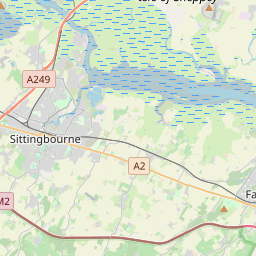
Faversham ( ) is a market town in Kent, England. It is located 8 miles (13 km) from Sittingbourne, 48 miles (77 km) from London and 10 miles (16 km) from Canterbury; it lies next to the Swale, a strip of sea separating mainland Kent from the Isle of Sheppey in the Thames Estuary.
Nº Q1000115 ★★
Incomum · Lugares
Faversham
Town in the English county of Kent
Faversham ( ) is a market town in Kent, England. It is located 8 miles (13 km) from Sittingbourne, 48 miles (77 km) from London and 10 miles (16 km) from Canterbury; it lies next to the Swale, a strip of sea separating mainland Kent from the Isle of Sheppey in the Thames Estuary.
No mapa


Último preço
—
Preço mínimo
—
Mediana 7 d
—
Vendas 30 d
0
Faixa 30 d
—
Em circulação
0
Cotação
mediana
mín – máx
vendas
Sem vendas no período
Ver tabela
| Data | mediana | Mín | Máx | vendas |
|---|
Histórico de vendas
- Última venda
- —
- Média 30 d
- —
- Mínima 30 d
- —
- Máxima 30 d
- —
- Vendas 7 d
- 0
- Vendas 30 d
- 0
Ainda sem vendas.
Vendas anônimas: sem comprador nem vendedor. Os números contam só vendas entre jogadores.
Na Wikipédia
Texto em inglês Ainda não há artigo no seu idioma: trecho em inglês.
Faversham ( ) is a market town in Kent, England. It is located 8 miles (13 km) from Sittingbourne, 48 miles (77 km) from London and 10 miles (16 km) from Canterbury; it lies next to the Swale, a strip of sea separating mainland Kent from the Isle of Sheppey in the Thames Estuary. The town is close to the A2, used by the Romans and the Anglo-Saxons, which follows an ancient British trackway now known as Watling Street. There has been a settlement at Faversham since pre-Roman times, as indicated by a Belgic Late Iron Age farmstead discovered under the playing fields of Queen Elizabeth's Grammar School. The farmstead was located in the broader region later associated by Ptolemy with the Cantii. The site later became a Roman villa. There is also evidence of Mesolithic and Neolithic human activity in and around the town. The Roman name was Durolevum. The modern name is of Old English origin, probably meaning "the metal-worker's village". It is mentioned in the Domesday Book of 1086 as Favreshant. The Barons of Faversham were using three lions passant guardant – the royal arms of England - as the arms for the town during the reign of the Plantagenet king Edward I. The town's medieval corporate seal bore the legend: 'Since I bear arms for the King without charge, I am a free port' (Regis ut arma rego libera portus ego). The town was favoured by King Stephen, who established Faversham Abbey, which survived until the Dissolution of the Monasteries in 1538. Subsequently, the town became an important seaport and established itself as a centre for brewing, and the Shepherd Neame Brewery, founded in 1698, remains a significant major employer. The town was also the centre of the explosives industry between the 17th and early 20th...
Texto: Wikipédia em inglês, CC BY-SA 4.0. · Imagem: Ed Webster (CC BY 2.0) ·