
Gideros
Ancient city of Pontus in modern-day Turkey
Cytorus (Greek Κύτωρος, Kytoros; also Cytorum, Κύτωρον, Kytoron and Κύτωρις) was an ancient Greek city on the northern coast of Asia Minor. Mentioned by Homer, Cytorus survives in the name of Gideros, which is both a bay of the Black Sea and the adjacent neighbourhood (mahalle) of the village of Kalafat in the district (ilçe) of Cide in the Kastamonu Province of Turkey.
Nº Q5201382 ★★★
Rare · Lieux
Gideros
Ancient city of Pontus in modern-day Turkey
Cytorus (Greek Κύτωρος, Kytoros; also Cytorum, Κύτωρον, Kytoron and Κύτωρις) was an ancient Greek city on the northern coast of Asia Minor. Mentioned by Homer, Cytorus survives in the name of Gideros, which is both a bay of the Black Sea and the adjacent neighbourhood (mahalle) of the village of Kalafat in the district (ilçe) of Cide in the Kastamonu Province of Turkey.
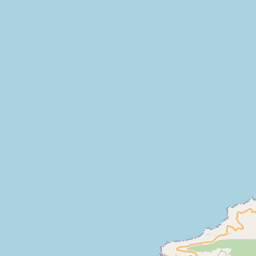
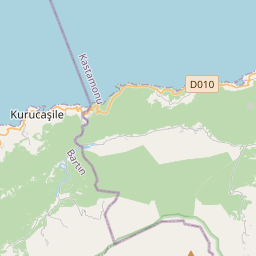
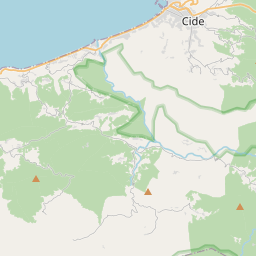
Sur la carte

Dernier prix
—
Prix plancher
—
Médiane 7 j
—
Ventes 30 j
0
Fourchette 30 j
—
En circulation
0
Cours
médiane
min – max
ventes
Aucune vente sur la période
Voir le tableau
| Date | médiane | Min | Max | ventes |
|---|
Historique des ventes
- Dernière vente
- —
- Moyenne 30 j
- —
- Plus bas 30 j
- —
- Plus haut 30 j
- —
- Ventes 7 j
- 0
- Ventes 30 j
- 0
Aucune vente pour l'instant.
Ventes anonymes : ni acheteur ni vendeur. Les chiffres ne comptent que les ventes entre joueurs.
Sur Wikipédia
Texte en anglais Pas encore d'article dans ta langue : extrait en anglais.
Cytorus (Greek Κύτωρος, Kytoros; also Cytorum, Κύτωρον, Kytoron and Κύτωρις) was an ancient Greek city on the northern coast of Asia Minor. Mentioned by Homer, Cytorus survives in the name of Gideros, which is both a bay of the Black Sea and the adjacent neighbourhood (mahalle) of the village of Kalafat in the district (ilçe) of Cide in the Kastamonu Province of Turkey. Gideros is 12 km west of the town of Cide, and 15 km east of Kurucaşile. Possibly the name of Cide itself is derived from Cytorus. Its mythical founder was Cytiorus, son of Phrixus, according to Ephorus and Stephanus of Byzantium. In giving the Trojan battle order in Book 2 of the Iliad, Homer mentions Cytorus and Sesamon as Paphlagonian settlements, along with others around the river Parthenius, today's Bartın River. Sesamon is today's Amasra. This town was Amastris for Strabo, who writes of its founding through a union of Cytorus, Sesamon, and two other settlements. He reports that Cytorus was an emporium of Sinope and was a source for boxwood. He derives the name of Cytorus (he uses the neuter Cytorum) from Cytorus, a son of Phryxus and therefore one of the Argonauts. In the Argonautica, Apollonius of Rhodes mentions the settlement of Cytorus and related places in describing the voyage of the Argo. Unlike Strabo, he does not mention Cytorus as a son of Phryxus. Apollonius does apparently place Cytorus where Gideros Bay is today, between the Bartın River and the city of Sinop. Apollonius applies the epithet "woody" to Cytorus, alluding to the boxwood that Strabo mentions. In the 4th of the Carmina, Catullus addresses "Box-tree-clad Cytórus", while in the Georgics, Virgil says, "Fain would I gaze on Cytorus billowy with boxwood". The Homeric commentator Eustathius of Thessalonica mentions a saying, "carry boxwood to...
Texte : Wikipédia en anglais, CC BY-SA 4.0. · Image : The original uploader was Crebain at Turkish Wikipedia. (CC BY-SA 3.0) ·
Cartes voisines

Pont (région)
Région historique du Nord de la Turquie, en bord de mer Noire
Nº Q621672 ★★★

Téos (ville)
Ville antique de la côte de l'Ionie au nord d'Éphèse et à environ 40 kilomètres de l'actuelle İzmir, près de port de Sığacık en Turquie
Nº Q17586 ★★

Pontos
Divinité de la mythologie grecque
Nº Q190563 ★★★

Assos
Ville turque
Nº Q744631 ★★

Sybaris
Cité de la Grande-Grèce, une colonie grecque du sud de l'Italie en Calabre actuelle
Nº Q220583 ★★★

Atarnée
Ancienne cité d'Éolide
Nº Q194810 ★★★