Runan Commandery
Former administrative territorial entity in China
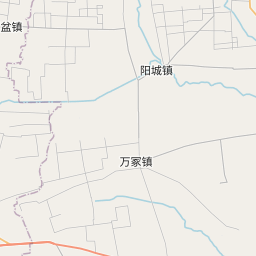
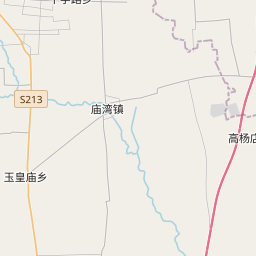
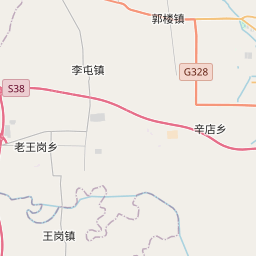
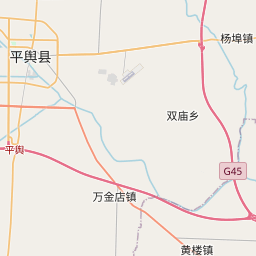
Runan Commandery (Chinese: 汝南郡) was a Chinese commandery from Han dynasty to Tang dynasty, located in modern Henan and Anhui provinces. The name referred to its location to the south of Ru River (汝水), a historical river that flowed into the Huai. Runan was part of the Huaiyang Kingdom in early Western Han dynasty.
Nº Q11133571 ★
Común · Lugares
Runan Commandery
Former administrative territorial entity in China
Runan Commandery (Chinese: 汝南郡) was a Chinese commandery from Han dynasty to Tang dynasty, located in modern Henan and Anhui provinces. The name referred to its location to the south of Ru River (汝水), a historical river that flowed into the Huai. Runan was part of the Huaiyang Kingdom in early Western Han dynasty.
En el mapa
Último precio
—
Precio mínimo
—
Mediana 7 d
—
Ventas 30 d
0
Rango 30 d
—
En circulación
0
Cotización
mediana
mín – máx
ventas
Sin ventas en el periodo
Ver tabla
| Fecha | mediana | Mín | Máx | ventas |
|---|
Historial de ventas
- Última venta
- —
- Media 30 d
- —
- Mínimo 30 d
- —
- Máximo 30 d
- —
- Ventas 7 d
- 0
- Ventas 30 d
- 0
Aún no hay ventas.
Ventas anónimas: sin comprador ni vendedor. Las cifras solo cuentan ventas entre jugadores.
En Wikipedia
Texto en inglés Aún no hay artículo en tu idioma: extracto en inglés.
Runan Commandery (Chinese: 汝南郡) was a Chinese commandery from Han dynasty to Tang dynasty, located in modern Henan and Anhui provinces. The name referred to its location to the south of Ru River (汝水), a historical river that flowed into the Huai. Runan was part of the Huaiyang Kingdom in early Western Han dynasty. In 156 BC, Runan was granted to Liu Fei, son of the reigning Emperor Jing as a principality. A year later, Fei's fief was changed to Jiangdu (江都), and Runan became a commandery. In late Western Han dynasty, it administered 37 counties, Pingyu (平輿), Yang'an (陽安), Yangcheng (陽城), Liqiang (郦強), Fubo (富波), Nüyang (女陽), Tongyang (鮦陽), Wufang (吳房), Ancheng (安成), Nandun (南頓), Langling (朗陵), Xiyang (細陽), Yichun (宜春), Nüyin (女陰), Xincai (新蔡), Xinxi (新息), Quyang (灈陽), Qisi (期思), Shenyang (慎陽), Shen (慎), Zhaoling (召陵), Yiyang (弋陽), Xiping (西平), Shangcai (上蔡), Qin (浸), Xihua (西華), Changping (長平), Xilu (宜祿), Xiang (項), Xinqi (新郪), Guide (歸德), Xinyang (新陽), Anchang (安昌), Anyang (安陽), Boyang (博陽), Chengyang (成陽) and Dingling (定陵). In 2 AD, the population was 2,596,148, in 461,587 households. In 140 AD during Eastern Han dynasty, the commandery administered 37 counties and had a population of 2,100,788, in 404,448 households. Two new commanderies, Yiyang and Ruyin (汝陰) was separated from Runan under Emperor Wen of Wei and Emperor Wu of Jin, respectively. In 280 AD, Runan Commandery retained 15 counties with the population was 21,500 households, while the three commanderies together had a population of 46,700 households. During Emperor Hui's reign, two new commanderies, Xincai and Nandun, were established in the region. Under Northern Wei, the commandery consisted of 8 counties, and the Book of Wei recorded a population of 37,061, or 15,889 households. The commandery was abolished in early Sui dynasty. Runan was part of Yu Prefecture...
Texto: Wikipedia en inglés, CC BY-SA 4.0. ·
Cartas cercanas
-
H
Henan Commandery
Commandery in China from Han dynasty to Tang dynasty
Nº Q11553546 ★★
Sin ofertas
-
H
Henei Commandery
Ancient Chinese political subdivision
Nº Q10770561 ★
Sin ofertas
-
Y
Yingchuan Commandery
Chinese Warring States commandery
Nº Q13624488 ★★
Sin ofertas
-
L
Le'an Commandery
Historic commandery of China
Nº Q10363004 ★
Sin ofertas
-
P
Pingyuan Commandery
Historical commandery of China
Nº Q11060733 ★
Sin ofertas
-
C
Changshan Commandery
Historical commandery of China located in present-day southern Hebei province
Nº Q11060338 ★
Sin ofertas