

Uncommon · Places
Urif
Village council in Nablus, West Bank, Palestine
Urif (Arabic: عوريف) is a Palestinian village in the Nablus Governorate of the State of Palestine, in the northern West Bank, located 13 kilometers (8 miles) south of Nablus. According to the Palestinian Central Bureau of Statistics (PCBS), the town had a population of 3,624 inhabitants in 2017.
Read more
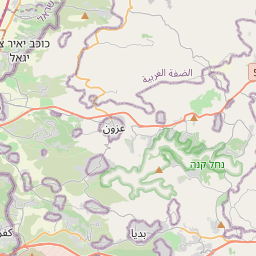
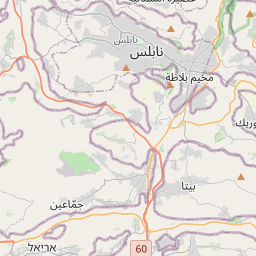
‘Urif is located 7.6km south of Nablus. It is bordered by ‘Einabus to the east, ‘Asira al Qibliya to the north, and Jamma’in to the west and south. Ceramics from the late Roman have been found here. Dauphin writes that ceramics from the Byzantine era also have been found, but Ellenblum writes that no pottery from that era has been found here. A woman of Dayr Urif, Sa'ida, was wed to Ahmad ibn Khalid ibn Qudama, a jurist and leader of Hanbali villagers in the Nablus area who fled from Crusader rule to Damascus between 1156 and 1173. Ahmad's grandson Diya al-Din (1173–1245) refers to the presence of Muslims in Urif during his lifetime. The medieval town of Gerraa, today the ruin of Khirbet Jarra'a, was located to the west. Urif was incorporated into the Ottoman Empire in 1517 with all of Palestine, and in 1596 it appeared in the tax registers as being in the nahiya (subdistrict) of Jabal Qubal of the liwa (district) of Nablus. It was noted as hali, empty, but a fixed tax rate of 33.3% was paid on various agricultural products, such as wheat, barley, summer crops, olive trees, goats and/or beehives, in addition to "occasional revenues"; a total of 2,800 akçe.
On the map
Text: Wikipédia, CC BY-SA 4.0. · Image: יעקב (CC BY-SA 3.0) ·