
Ru ware
Chinese pottery made by the Song dynasty around 1100 AD
Ru ware, Ju ware (Chinese: 汝瓷), or "Ru official ware" (Chinese: 汝官瓷) is a famous and extremely rare type of Chinese pottery from the Song dynasty, produced for the imperial court for a brief period around 1100. Fewer than 100 complete pieces survive, though there are later imitations which do not entirely match the originals.
Nº Q2171435 ★
Common · Places
Ru ware
Chinese pottery made by the Song dynasty around 1100 AD
Ru ware, Ju ware (Chinese: 汝瓷), or "Ru official ware" (Chinese: 汝官瓷) is a famous and extremely rare type of Chinese pottery from the Song dynasty, produced for the imperial court for a brief period around 1100. Fewer than 100 complete pieces survive, though there are later imitations which do not entirely match the originals.
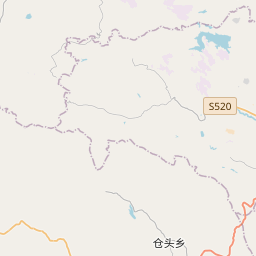
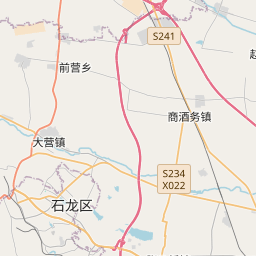
On the map
Last price
—
Floor price
—
7-day median
—
30-day sales
0
30-day range
—
In circulation
0
Price history
median
low – high
sales
No sales in this period
Show table
| Date | median | Low | High | sales |
|---|
Sales history
- Last sale
- —
- 30-day average
- —
- 30-day low
- —
- 30-day high
- —
- Sales 7d
- 0
- Sales 30d
- 0
No sales yet.
Anonymous sales: no buyer or seller shown. Figures count player-to-player sales only.
From Wikipedia
Ru ware, Ju ware (Chinese: 汝瓷), or "Ru official ware" (Chinese: 汝官瓷) is a famous and extremely rare type of Chinese pottery from the Song dynasty, produced for the imperial court for a brief period around 1100. Fewer than 100 complete pieces survive, though there are later imitations which do not entirely match the originals. Most have a distinctive pale "duck-egg" blue glaze, "the colour of the sky after rain, glimpsed through a parting in the clouds" according to a medieval connoisseur, and are otherwise undecorated, though their colours vary and reach into a celadon green. The shapes include dishes, probably used as brush-washers, cups, wine bottles (carafes in modern terms), small vases, and censers and incense-burners. They can be considered as a particular form of celadon wares. Ru ware represents one of the Five Great Kilns identified by later Chinese writers. The wares were reserved for the Imperial court, with according to one contemporary source only those they rejected reaching a wider market. The source, Zhou Hui, also says the glaze contained agate, and when the kiln site was located in recent decades it was indeed very close to a site for mining agate, which is very largely composed of silica, a usual component of ceramic glazes. However, experts now discount any influence of agate in achieving the Ru glaze colour. The bluish colour may be due to dissolved iron oxide with a very low amount of titanium dioxide. Ru ware is perhaps the first "official ware" specifically commissioned by the imperial court. Their normal practice seems to have been to review the large quantities of "tributary ware" given to them by the provinces making ceramics, effectively as a form of tax. The court kept what they wanted and redistributed the remainder as part of their lavish gifts to...
Text: Wikipédia, CC BY-SA 4.0. · Image: Johnbod (CC BY-SA 4.0) ·
Related cards

Yayoi pottery
Ancient pottery in Japan during the Yayoi period
Nº Q11487461 ★★★

Bizen ware
Type of Japanese pottery
Nº Q3736596 ★★★

Kosiv painted ceramics
Traditional national Hutsul handicrafts, one of the varieties of Ukrainian ceramics
Nº Q85993896 ★★★★

Gzhel
Russian style of blue and white ceramics
Nº Q1127520 ★★★★

Cyan
Color visible between blue and green; subtractive (CMY) primary color
Nº Q180778 ★★★★

Mumun pottery period
Archaeological era in Korean prehistory (ca. 1500–300 BCE), named after the undecorated or plain cooking and storage vessels that form a large part of the pottery assemblage over the entire length of the period
Nº Q721164 ★★