
Haifa
Third-largest city in Israel
Haifa ( HY-fə; Hebrew: חיפה, romanized: Ḥayfā, IPA: [ˈχajfa]; Arabic: حيفا, romanized: Ḥayfā, IPA: [ħaj.faː]) is the third-largest city in Israel—after Jerusalem and Tel Aviv—with a population of 297,082 in 2024. The city of Haifa forms part of the Haifa metropolitan area, the third-most populous metropolitan area in Israel.
Nº Q41621 ★★★★
Super Rare · Places
Haifa
Third-largest city in Israel
Haifa ( HY-fə; Hebrew: חיפה, romanized: Ḥayfā, IPA: [ˈχajfa]; Arabic: حيفا, romanized: Ḥayfā, IPA: [ħaj.faː]) is the third-largest city in Israel—after Jerusalem and Tel Aviv—with a population of 297,082 in 2024. The city of Haifa forms part of the Haifa metropolitan area, the third-most populous metropolitan area in Israel.
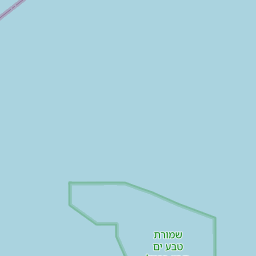
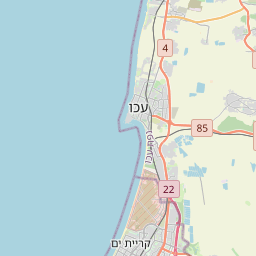
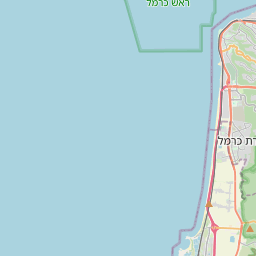
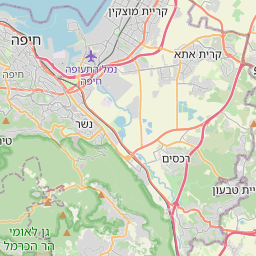
On the map
Last price
—
Floor price
—
7-day median
—
30-day sales
0
30-day range
—
In circulation
0
Price history
median
low – high
sales
No sales in this period
Show table
| Date | median | Low | High | sales |
|---|
Sales history
- Last sale
- —
- 30-day average
- —
- 30-day low
- —
- 30-day high
- —
- Sales 7d
- 0
- Sales 30d
- 0
No sales yet.
Anonymous sales: no buyer or seller shown. Figures count player-to-player sales only.
From Wikipedia
Haifa ( HY-fə; Hebrew: חיפה, romanized: Ḥayfā, IPA: [ˈχajfa]; Arabic: حيفا, romanized: Ḥayfā, IPA: [ħaj.faː]) is the third-largest city in Israel—after Jerusalem and Tel Aviv—with a population of 297,082 in 2024. The city of Haifa forms part of the Haifa metropolitan area, the third-most populous metropolitan area in Israel. It is home to the Baháʼí Faith's Baháʼí World Centre, a UNESCO World Heritage Site and destination for Baháʼí pilgrimage. Built on the slopes of Mount Carmel, the settlement has a history spanning more than 3,000 years. Over the millennia, the Haifa area has changed hands: being conquered and ruled by the Canaanites, Israelites, Phoenicians, Assyrians, Babylonians, Persians, Hasmoneans, Romans, Byzantines, Arabs, Crusaders, Ottomans, and the British. The earliest known settlement in the vicinity was Tell Abu Hawam, a small port city established in the Late Bronze Age (14th century BCE). In the 3rd century CE, Haifa was known as a dye-making center. Haifa el-Atika, 5 km northwest of Tell Abu Hawam, is the former site of Haifa as it existed between the 11th–18th centuries. In the late Ottoman period, in the 1760s, Haifa el-Atika was relocated 2.5 kilometres (1+1⁄2 miles) to the east as a new, fortified town, today known as the Old City of Haifa. Whilst in the late 19th century the population was almost exclusively Arab, it was a mixed city during the Mandate period, with a balanced population mix of a 55% Jewish majority alongside a 45% Arab minority by 1945. During and after the Battle of Haifa in the 1948 Palestine war, most of the city's Arab population fled or were expelled and the Old City was subsequently demolished. That year, the city became part of the then-newly established state of Israel. Today it is one of Israel's mixed cities, with an Arab-Israeli population of c.10%....
Text: Wikipédia, CC BY-SA 4.0. · Image: Michael Paul Gollmer de:Benutzer:Mipago (CC BY-SA 3.0) ·
Related cards

Haifa metropolitan area
Metropolitan area surrounding the city of Haifa in northern Israel
Nº Q5639058 ★★★

Port of Haifa
Seaport in Haifa, Israel, on the Mediterranean Sea
Nº Q1376739 ★

Romema (Haifa)
Neighborhood in Haifa
Nº Q2899850 ★★★

Geva Carmel
Place in Haifa
Nº Q2776856 ★★★★

Yagur
Human settlement in Haifa district, Israel
Nº Q586687 ★

French Carmel
Neighborhood of Haifa
Nº Q2897599 ★★★