

Common · Places
Golan
Ancient city
Golan (Hebrew: גּוֹלָן, romanized: Gōlān) is a city of refuge mentioned in the Hebrew Bible, later known from the works of Josephus (first century CE) and Eusebius (Onomasticon, early 4th century CE). The biblical city of Golan could not be positively identified, but most researchers localize it at Sahm el-Jaulān in Syria's Daraa Governorate.
Read more
A 1954 attempt by Zev Vilnay to identify the site of Golan based on a place mentioned in the Talmud as Goblana, took him to a similarly named ruined village, ej-Jelêbîne, near the Hula Valley. The name of the area is said by Brown–Driver–Briggs to derive from the triliteral Semitic root g-w-l, meaning to go around, as in a circle, leading to the sense of the word as referring to a region or district. Similarly, it is said to mean "circle" or "enclosure". The name "Golan" is described in the Hebrew Bible as a city allocated to the half-tribe of Manasseh in the territory of Bashan that the Israelites conquered from the Amorites. Golan was designated as one of the six Cities of Refuge, the most northerly of the three cities of refuge east of the Jordan River, and was given as a Levitical city to the Gershonite Levites (Deuteronomy 4:43 "וְאֶת־גּוֹלָ֥ן בַּבָּשָׁ֖ן לַֽמְנַשִּֽׁי" "and Golan, in Bashan, belonging to the Manassites"; Joshua 20:8 "וְאֶת־גּוֹלָ֥ן בַּבָּשָׁ֖ן מִמַּטֵּ֥ה מְנַשֶּֽׁה" "and Golan in Bashan from the tribe of Manasseh"; and 1 Chronicles 6:56 "אֶת־גּוֹלָ֥ן בַּבָּשָׁ֖ן וְאֶת־מִגְרָשֶׁ֑יהָ" "Golan in Bashan with its pasturelands"). The shift in the meaning of Golan, from a town to a broader district or territory, is first attested by the Jewish historian Josephus, who calls it Gaulanitis (Γαυλανῖτις, Gaulanîtis),. His account likely reflects Roman administrative changes implemented after the Great Jewish Revolt (66–73 CE). The name Golan Heights was not used before the 19th century.
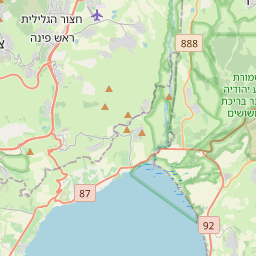
On the map



1 copy in circulation
Text: Wikipédia, CC BY-SA 4.0. · Image: Mogador (CC BY-SA 3.0) ·