

Rare · Places
Colossae
Ancient city of Phrygia in modern-day Turkey
Colossae (; Ancient Greek: Κολοσσαί), sometimes called Colosse, also identified by medieval writers as Chonae (Greek: Χῶναι), was a city in Phrygia, in southern Asia Minor. A significant city from the 5th century BC onwards, it was notable for its healing springs and, later, for its veneration of the Archangel Michael.
Read more
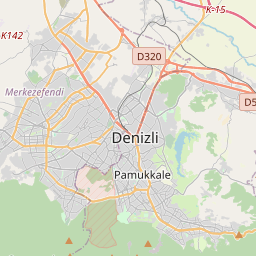
Colossae (/kəˈlɒsi/; Ancient Greek: Κολοσσαί), sometimes called Colosse, also identified by medieval writers as Chonae (Greek: Χῶναι), was a city in Phrygia, in southern Asia Minor. A significant city from the 5th century BC onwards, it was notable for its healing springs and, later, for its veneration of the Archangel Michael. The Epistle to the Colossians, an early Christian text which identifies its author as Paul the Apostle, is addressed to the church in Colossae. The city was part of the Roman and Byzantine province of Phrygia Pacatiana. Colossae was in Phrygia, in Asia Minor. It was located 15 km (9.3 mi) southeast of Laodicea on the road through the Lycus Valley near the Lycus River at the foot of Mt. Cadmus, the highest mountain in Turkey's western Aegean Region, between the cities of Sardis and Celaenae, and southeast of the ancient city of Hierapolis. Herodotus said that at Colossae "the river Lycos falls into an opening of the earth and disappears from view, and then after an interval of about five furlongs it comes up to view again, and this river also flows into the Meander River". Ancient Colossae is situated in the modern province of Honaz, to the north of its later medieval counterpart of Chonae, with what remains of the buried ruins of Colossae ("the mound") lying 3 km (1.9 mi) to the north of Honaz. The medieval poet Manuel Philes incorrectly said that the name Colossae was connected to the Colossus of Rhodes.
On the map


Text: Wikipédia, CC BY-SA 4.0. · Image: A.Savin (FAL) ·