

Legendary · Places
Berlin
Federated state, capital and largest city of Germany
Berlin is the capital and largest city of Germany. With 3.7 million inhabitants, it has the highest population within its city limits of any city in the European Union (EU). The metropolis is also one of the states of Germany, being the third-smallest state in the country by area.
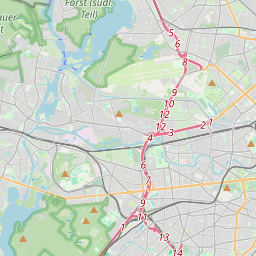
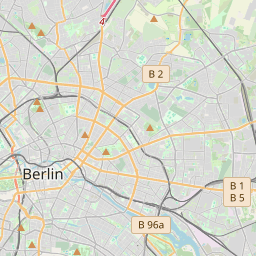
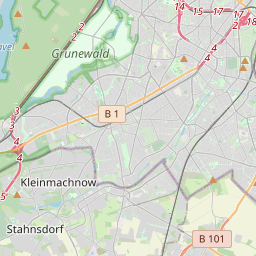
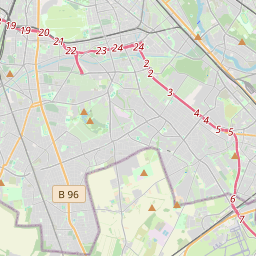
On the map
From Wikipedia
Berlin is the capital and largest city of Germany. With 3.7 million inhabitants, it has the highest population within its city limits of any city in the European Union (EU). The metropolis is also one of the states of Germany, being the third-smallest state in the country by area. Berlin is surrounded by the state of Brandenburg, bordering Brandenburg's capital Potsdam to the southwest. The urban area of Berlin has a population of 4.5 million, making it the second most populous in Germany after the Ruhr. The Berlin-Brandenburg capital region has around 6.2 million inhabitants and is Germany's second-largest metropolitan region after the Rhine-Ruhr region, as well as the fifth-biggest metropolitan region by GDP in the EU. Berlin is a global city of culture, politics, media and science. Berlin was built along the banks of the Spree river, which flows into the Havel in the western borough of Spandau. First documented in the 13th century and at the crossing of two important historic trade routes, Berlin was designated the capital of the Margraviate of Brandenburg (1417–1701), Kingdom of Prussia (1701–1918), German Empire (1871–1918), Weimar Republic (1919–1933), and Nazi Germany (1933–1945). Berlin served as a scientific, artistic, and philosophical hub during the Age of Enlightenment, Neoclassicism, and the German revolutions of 1848–1849.
Text: Wikipédia, CC BY-SA 4.0. · Image: Thomas Wolf, www.foto-tw.de (CC BY-SA 3.0) ·