
Bamyan
The Cradle of Hazara Civilization
Bamyan, also spelled as Bamiyan or Bamian (Dari, Pashto: بامیان), is a city in central Afghanistan, serving as the capital of Bamyan Province. It is within the jurisdiction of Bamyan District and has an estimated population of 103,909 people. This makes Bamyan the largest municipality in Hazarajat.
Nº Q214495 ★★★
Rare · Places
Bamyan
The Cradle of Hazara Civilization
Bamyan, also spelled as Bamiyan or Bamian (Dari, Pashto: بامیان), is a city in central Afghanistan, serving as the capital of Bamyan Province. It is within the jurisdiction of Bamyan District and has an estimated population of 103,909 people. This makes Bamyan the largest municipality in Hazarajat.
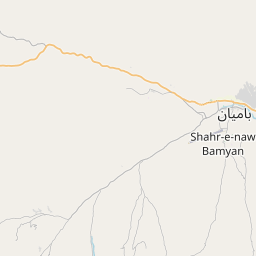
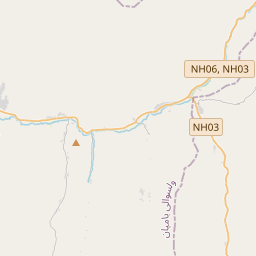
On the map
Last price
—
Floor price
—
7-day median
—
30-day sales
0
30-day range
—
In circulation
0
Price history
median
low – high
sales
No sales in this period
Show table
| Date | median | Low | High | sales |
|---|
Sales history
- Last sale
- —
- 30-day average
- —
- 30-day low
- —
- 30-day high
- —
- Sales 7d
- 0
- Sales 30d
- 0
No sales yet.
Anonymous sales: no buyer or seller shown. Figures count player-to-player sales only.
From Wikipedia
Bamyan, also spelled as Bamiyan or Bamian (Dari, Pashto: بامیان), is a city in central Afghanistan, serving as the capital of Bamyan Province. It is within the jurisdiction of Bamyan District and has an estimated population of 103,909 people. This makes Bamyan the largest municipality in Hazarajat. The Bamyan Airport is located in the middle of the city. It is surrounded by houses, businesses, schools and public parks. The Bamyan University is also near there. Band-e-Amir National Park is located around 2-hour drive to the west from the city's center. The driving distance between Bamyan and Kabul is approximately 180 km (110 mi). There is another road from Bamyan that leads east to Bagram in Parwan Province. Bamyan sits at an altitude of about 8,366 ft (2,550 m) above sea level. The municipality is divided into four districts and has a total land area of 35 km2 (14 sq mi). There are about 4,435 dwelling units in the city. Bamyan marked the most westerly point of Buddhist expansion and was a crucial hub of trade for much of the second millennium CE. It was a place where East met West and its archaeology reveals a blend of Greek, Turkic, Persian, Chinese, and Indian influences. The city has been one of Afghanistan's most touristic places. Bamyan is referred to by some as the "Shining Light" and "Valley of Gods". In 2008 the world's oldest oil paintings were found in Bamyan Valley caves. There are several tourist attractions near the city, including the destroyed Buddhas of Bamyan, which were carved into cliffs on the north side of Bamyan city in the 3rd to 5th centuries CE, dating them to the pre-Islamic Hephthalite rule. They were part of a UNESCO World Heritage Site and were destroyed by the Taliban in 2001. Other tourist...
Text: Wikipédia, CC BY-SA 4.0. · Image: Alexander Burnes (Public domain) ·
Related cards

Bamyan Province
Province of Afghanistan
Nº Q171382 ★★

Hazarajat
Region in the central highlands of Afghanistan
Nº Q6178796 ★★

Maymana
Capital of Faryab Province, northwest Afghanistan
Nº Q309345 ★

Kabul
Capital and the largest city of Afghanistan
Nº Q5838 ★★★★

Hairatan
Human settlement in Afghanistan
Nº Q3364500 ★★

Maidan Wardak Province
Province of Afghanistan
Nº Q183056 ★