
Alsace
Territorial community and former administrative region of France
Alsace is a cultural region and a territorial collectivity in the Grand Est administrative region of northeastern France, on the west bank of the upper Rhine, next to Germany and Switzerland. In January 2021, it had a population of 1,919,745. Alsatian culture is characterized by a blend of German and French influences.
Nº Q1142 ★★★★★
Ultra Rare · Places
Alsace
Territorial community and former administrative region of France
Alsace is a cultural region and a territorial collectivity in the Grand Est administrative region of northeastern France, on the west bank of the upper Rhine, next to Germany and Switzerland. In January 2021, it had a population of 1,919,745. Alsatian culture is characterized by a blend of German and French influences.
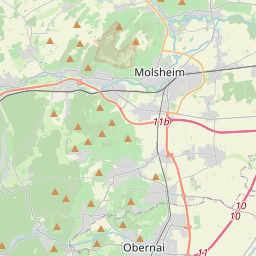
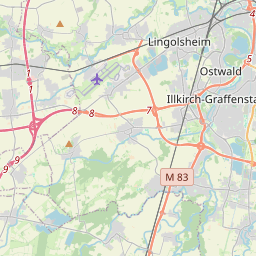
On the map
Last price
—
Floor price
—
7-day median
—
30-day sales
0
30-day range
—
In circulation
0
Price history
median
low – high
sales
No sales in this period
Show table
| Date | median | Low | High | sales |
|---|
Sales history
- Last sale
- —
- 30-day average
- —
- 30-day low
- —
- 30-day high
- —
- Sales 7d
- 0
- Sales 30d
- 0
No sales yet.
Anonymous sales: no buyer or seller shown. Figures count player-to-player sales only.
From Wikipedia
Alsace is a cultural region and a territorial collectivity in the Grand Est administrative region of northeastern France, on the west bank of the upper Rhine, next to Germany and Switzerland. In January 2021, it had a population of 1,919,745. Alsatian culture is characterized by a blend of German and French influences. Until 1871, Alsace included the area now known as the Territoire de Belfort, which formed its southernmost part. From 1982 to 2016, Alsace was the smallest administrative région in metropolitan France, consisting of the Bas-Rhin and Haut-Rhin departments. Territorial reform passed by the French Parliament in 2014 resulted in the merger of the Alsace administrative region with Champagne-Ardenne and Lorraine to form Grand Est. On 1 January 2021, the departments of Bas-Rhin and Haut-Rhin merged into the new European Collectivity of Alsace but remained part of the region Grand Est. In April 2026, the French National Assembly approved a bill to separate Alsace from the Grand Est region, though this bill has yet to pass the Senate. Alsatian is an Alemannic dialect closely related to Swabian, although since World War II most Alsatians primarily speak French. Internal and international migration since 1945 has also changed the ethnolinguistic composition of Alsace. The economic and cultural capital of Alsace, as well as its largest city, is Strasbourg, which sits on the present German international border. The city is the seat of several international organizations and bodies. Alsace was part of the Holy Roman Empire of the German Nation, but after defeat in the Thirty Years' War it was annexed by France in the 17th century. In 1871 it became part of the newly founded German Empire. Alsace was returned to France in 1919, but was reincorporated into Germany in 1940. After 1944 it again became French.
Text: Wikipédia, CC BY-SA 4.0. · Image: Neptuna (CC BY-SA 3.0) ·
Related cards

Alsace-Moselle
French administrative area consisting of the departments Bas-Rhin, Haut-Rhin, and Moselle
Nº Q2840162 ★★★

Alsatians
Ethnic group
Nº Q4531496 ★★★

Strasbourg
Capital and largest city of Grand Est, located in the historical region of Alsace
Nº Q6602 ★★★★★★

Lorraine
Former administrative region of France
Nº Q22248793 ★★★

Alsace–Lorraine
1871–1918 territory of the German Empire
Nº Q155144 ★★★★

Altmark
Region in the north west of Saxony-Anhalt, Germany
Nº Q442655 ★★★★