

Uncommon · Places
Abydos (Hellespont)
Ancient city of Mysia in modern-day Turkey
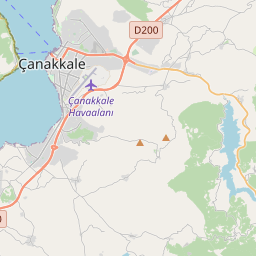
Abydos (Ancient Greek: Ἄβυδος, Latin: Abydus) was an ancient city and bishopric in Mysia. It was located at the Nara Burnu promontory on the Asian coast of the Hellespont (the straits of Dardanelles), opposite the ancient city of Sestos, and near the city of Çanakkale in Turkey.
Read more
Abydos was founded in c. 670 BC at the most narrow point in the straits, and thus was one of the main crossing points between Europe and Asia, until its replacement by the crossing between Lampsacus and Kallipolis in the 13th century, and the abandonment of Abydos in the early 14th century. In Greek mythology, Abydos is presented in the myth of Hero and Leander as the home of Leander. The city is also mentioned in Rodanthe and Dosikles, a novel written by Theodore Prodromos, a 12th-century writer, in which Dosikles kidnaps Rodanthe at Abydos. In 1675, the site of Abydos was first identified, and was subsequently visited by numerous classicists and travellers, such as Robert Wood, Richard Chandler, and Lord Byron. The city's acropolis is known in Turkish as Mal Tepe. Following the city's abandonment, the ruins of Abydos were scavenged for building materials from the 14th to the 19th century, and remains of walls and buildings continued to be reported until at least the 19th century; however, little remains and the area was declared a restricted military zone in the early 20th century, thus little to no excavation has taken place. Abydos is mentioned in the Iliad as a Trojan ally, and, according to Strabo, was occupied by Bebryces and later Thracians after the Trojan War. It has been suggested that the city was originally a Phoenician colony as there was a temple of Aphrodite Porne (Aphrodite the Harlot) within Abydos.
On the map
Text: Wikipédia, CC BY-SA 4.0. · Image: Wikimedia Commons (CC BY-SA 3.0) ·